X-ray Diffraction (D2RX)
Presentation
The X-ray Diffraction and Scattering Division is one of the ten instrumental divisions that make up the Advanced Characterization Platform of the Chevreul Institute.
It includes 7 X-ray diffractometers, 1 small- and wide-angle X-ray scattering bench (SAXS/WAXS) and 2 X-ray fluorescence instruments
This comprehensive set of equipment provides access to a wide range of structural analyses on polycrystalline compounds, single crystals, and thin films, whether under ambient conditions or under external stimuli (temperature, pressure, humidity, gas atmosphere, etc.).
The D2RX Division is open to all partners (researchers, students, and industrial collaborators) wishing to carry out X-ray diffraction studies on crystalline solids, whether in powder, bulk, single-crystal, or thin-film form.
Expertise and Know-How
- Determination of the composition of mixtures of crystalline phases (identification and quantification)
- Crystallite size determination
- Rietveld refinement method
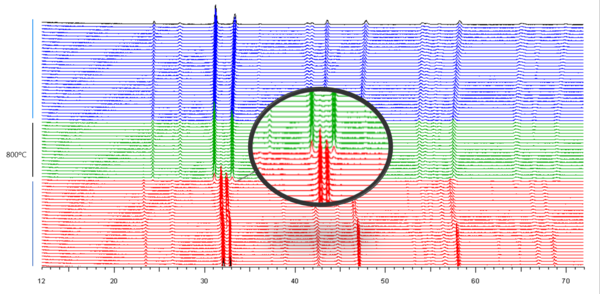
- Study of phase transitions under external stimuli (high temperature, humidity, gas, etc.)
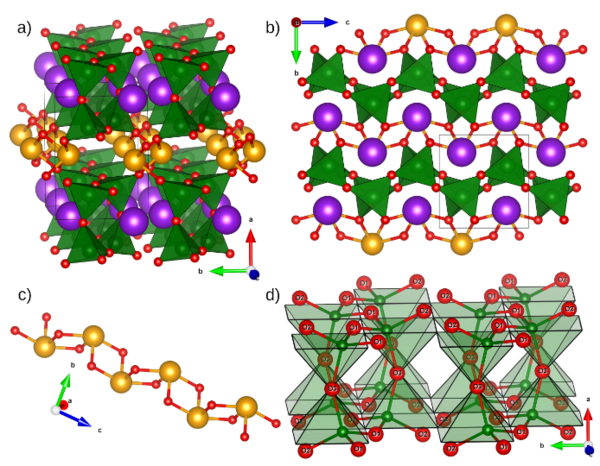
- Structure determination from single crystals (ambient, high and low temperatures, high pressures) and/or powders
- Determination of absolute structure
- Structural evolution induced by deformation, polymer plasticity, X-ray diffraction/scattering, biopolymers
- Thin films: grazing incidence measurements, reflectometry, stress measurements, pole figures, texture analysis, reciprocal space mapping, rocking curves, etc.
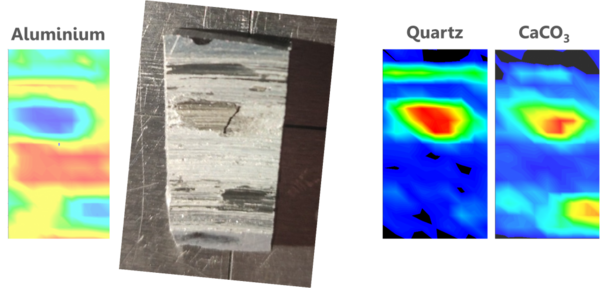
- Elemental analysis by X-ray fluorescence (macro and micro)
For any analysis request, please send an email to the following address: pole-rx_at_univ-lille.fr
| Name: | Mail: | Phone: |
|---|---|---|
| Pascal ROUSSEL (Scientific Head of the Cluster) | pascal.roussel_at_univ-lille.fr | Tél : 03 20 05 87 33 |
| Frédéric CAPET (Single Crystals, Rotating Anode Powders - Technical Head of the Cluster) | frederic.capet_at_univ-lille.fr | Tél : 03 20 05 87 32 |
| Laurence BURYLO (Powders at RT and HT under controlled atmosphere) | laurence.burylo_at_centralelille.fr | Tél : 03 20 05 87 35 |
| Florence DANEDE (Powders) | florence.danede_at_univ-lille.fr | Tél : 03 20 43 47 08 |
| Lydia KARMAZIN (Rotating Anode - Bulk Materials and Thin Films) | lydia.karmazin_at_univ-lille.fr | Tél : 03 20 05 87 36 |
| Jean-François TAHON (SAXS-WAXS) | jean-francois.tahon_at_univ-lille.fr | Tél : 03 20 33 62 04 |
| Maxence VANDEWALLE (X-ray Fluorescence) | maxence.vandewalle_at_centralelille.fr | Tél : 03 74 95 13 96 |
Location
(C3) Ground Floor- Chevreul Institute Building – Cité Scientifique
59655 Villeneuve d’Ascq, France
Equipment
The D2RX Division is equipped with 10 X-ray analysis instruments (diffraction, scattering, and fluorescence), which can be grouped into five main categories:
The D2RX Division is equipped with several instruments dedicated to the study of polycrystalline samples (powders or bulk materials) via X-ray diffraction. These instruments allow:
- Analysis of the crystalline phases present in a sample
- Extraction of microstructural information (crystallite size, microstrains)
- In situ studies under variable temperatures (-260°C to 1500°C), controlled atmospheres (N₂, O₂, He, vacuum…), and controlled humidity
Applications include investigating the behavior of catalysts under different atmospheres and temperatures, assessing the thermal stability of crystallized sugars, or studying the polymorphism of pharmaceutical compounds.
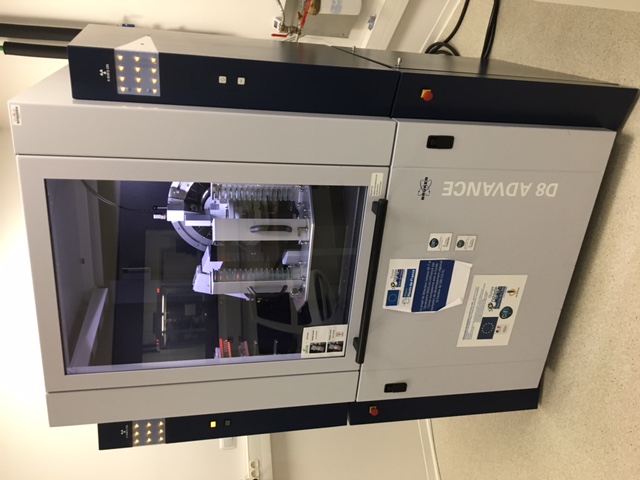
D8-PASSEUR (Ambient Temperature)
This diffractometer is dedicated to the study of polycrystalline samples at ambient temperature. It is equipped with a fast linear detector of type Lynxeye XE-T and a 90-position sample changer robot.
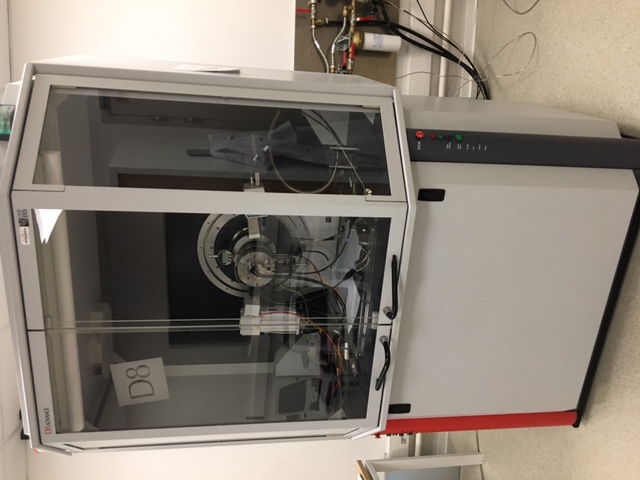
D8-HTK1200N (High Temperature)
This diffractometer is dedicated to the study of polycrystalline samples at high temperature (1200°C) and under non-corrosive gas flow (vacuum, inert gases). It is equipped with a fast detector of type Lynxeye and a high-temperature chamber of type Anton Paar HTK1200N.
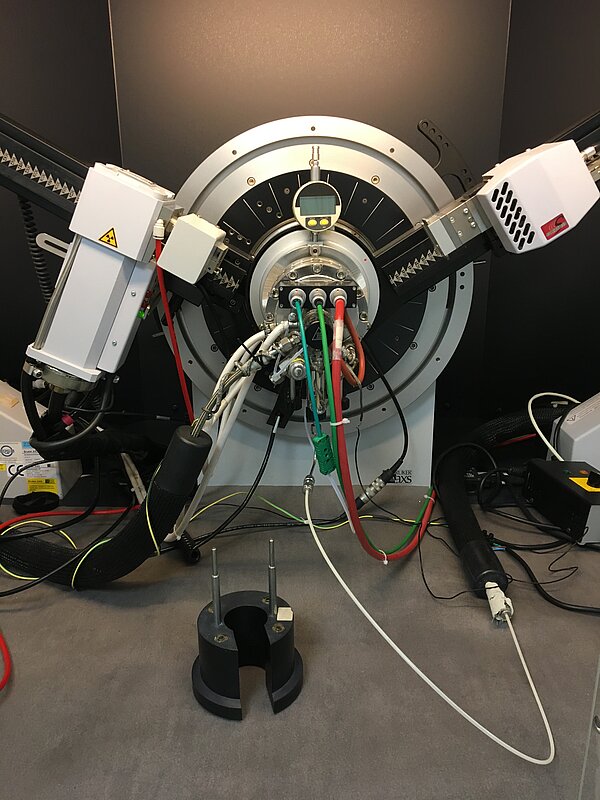
D8-XRK900 (High Temperature)
This diffractometer is dedicated to the study of polycrystalline samples at high temperature (900°C) and under corrosive or non-corrosive gas flow (vacuum, H₂, O₂, H₂O), with pressures ranging from 1 mbar to 10 bars. It is equipped with a fast detector of type Lynxeye and a reactive chamber of type Anton Paar XRK900.
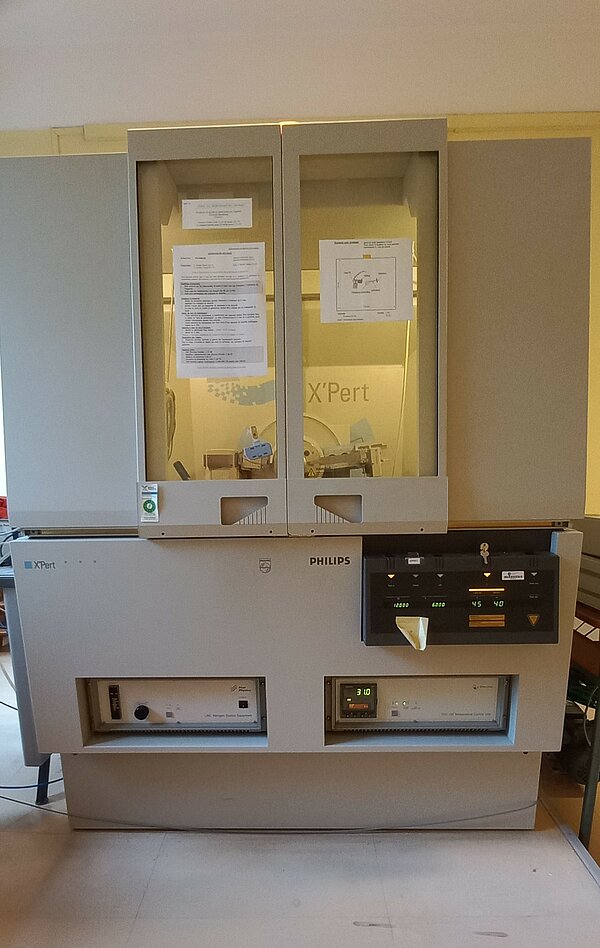
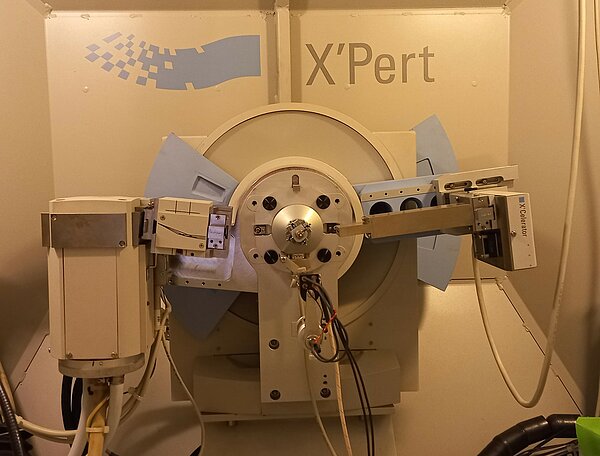
XPERT-Cu (Ambient, Low, and High Temperatures)
This diffractometer is dedicated to the study of polycrystalline samples from -193°C to +450°C. It allows the analysis of powders in reflection or transmission (capillaries). It is equipped with a fast detector of type X’celerator, an Anton Paar TTK450 chamber, an Anton Paar THC humidity-controlled chamber, and a HUBER capillary furnace (ambient to 1000°C).
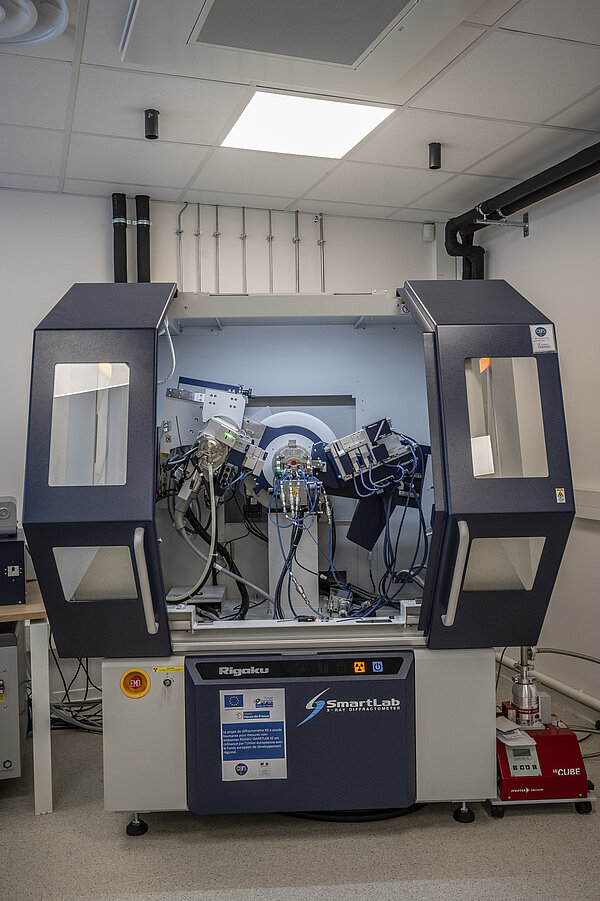
SMARTLAB XE (Ultra-High and Ultra-Low Temperatures)
This diffractometer is dedicated to the study of polycrystalline samples from -260°C to +1500°C. It is a 9 kW rotating anode multi-environment diffractometer.
It is equipped with:
- A 1D detector
- A 2D detector
- Rigaku MHTA furnace, 1500°C, under non-corrosive gas flow
- Rigaku Reactor-X reactive chamber, up to 1100°C with infrared heating, under corrosive or non-corrosive gas flow
- Oxford Cryosystems Phenix low-temperature chamber, 12 K
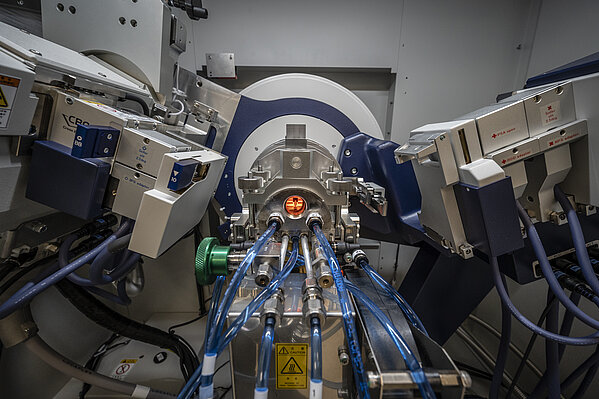
The D2RX Division is equipped with 2 diffractometers dedicated to the study of single-crystal samples. They allow crystal structure determination of organic, inorganic, or organometallic compounds at ambient, low (100 K), and high (1000°C) temperatures. These instruments are equipped with three types of X-ray sources: Mo, Ag, and Cu.
Cet équipement permet d'étudier tous types de composés allant des composés très absorbants aux stuctures absolues en passant par des études sous haute pression.
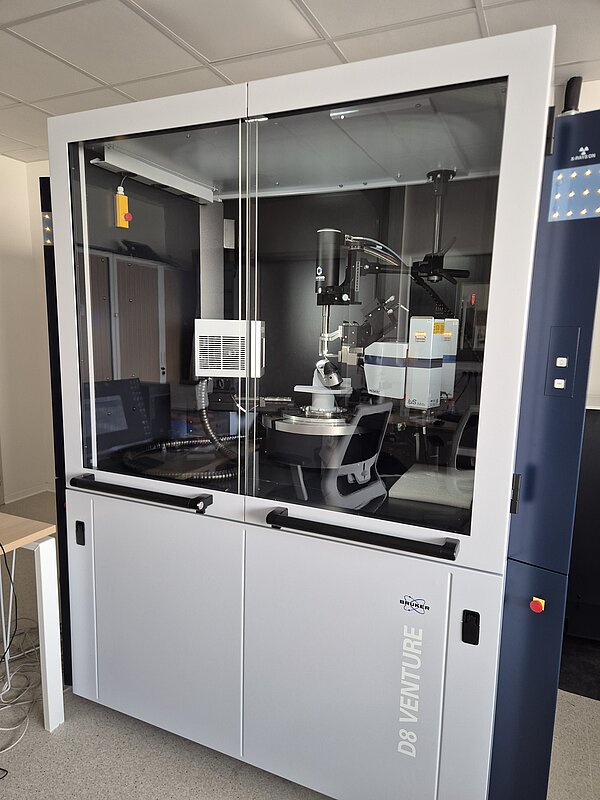
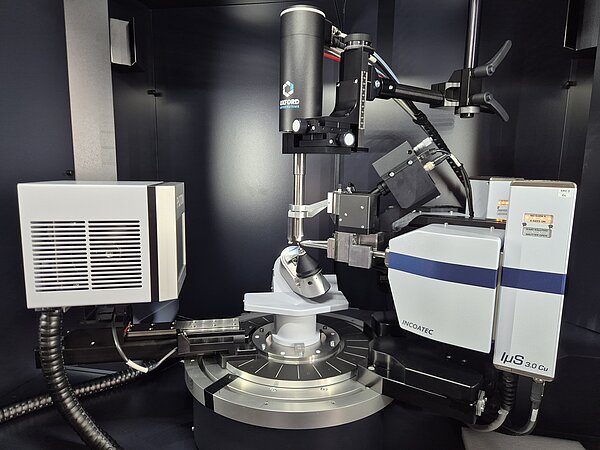
D8 Venture PHOTON IV
This four-circle diffractometer is dedicated to the study of single-crystal samples at ambient, high (1200 K), and low (80 K) temperatures.
It is equipped with a two-dimensional detector of type PHOTON IV C16 and two X-ray sources (Mo and Cu).
This instrument allows the study of all types of compounds, from highly absorbing materials to absolute structure determination, as well as high-pressure experiments.
The D2RX Division has a 9 kW rotating anode diffractometer dedicated to the study of bulk or powder polycrystalline samples and thin films. It allows “classical” diffraction measurements as well as grazing incidence measurements, reflectometry, stress measurements, pole figures, texture analysis, reciprocal space mapping, rocking curves, etc., all as a function of temperature and under controlled atmosphere.
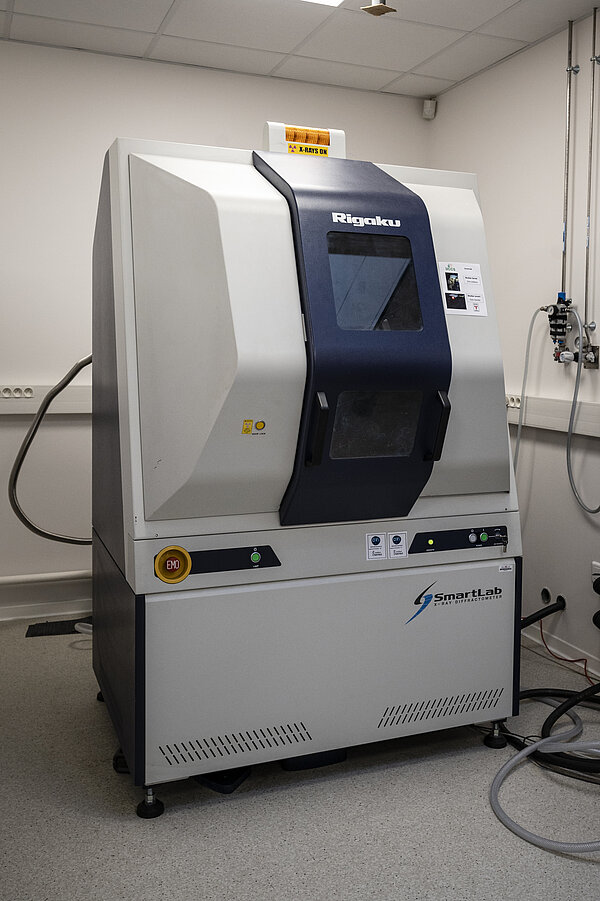
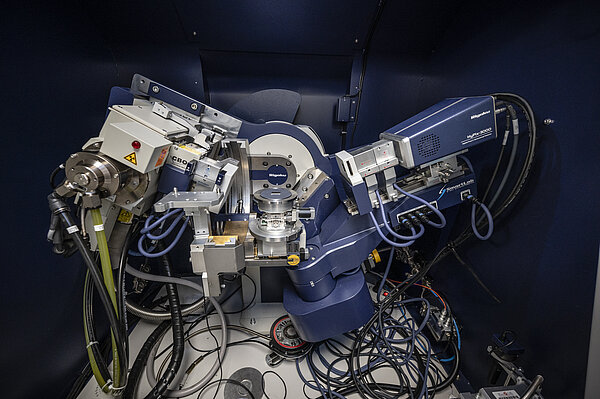
SMARTLAB – Thin Films
This 9 kW rotating anode diffractometer is dedicated to the study of bulk or powder polycrystalline samples and thin films from ambient temperature to 1100°C. It is equipped with 7 circles and allows in-plane and out-of-plane measurements. The diffractometer is equipped with:
- A 1D detector
- A 2D detector
- A high-temperature chamber of type Anton Paar DHS 1100
It is possible, on this instrument, to perform microdiffraction.
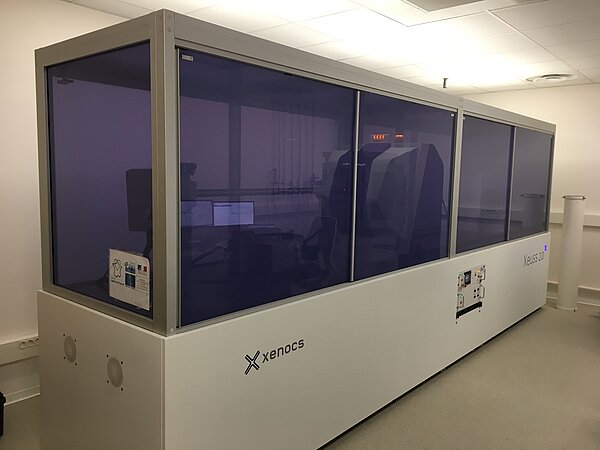
SAXS – WAXS
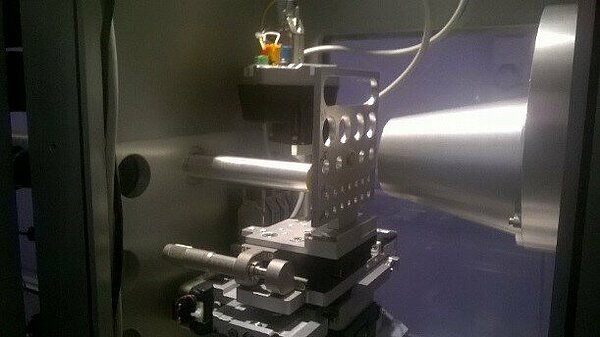
Small- and wide-angle measurement bench (SAXS and WAXS) equipped with a XENOCS micro-source using Copper and a hybrid pixel detector of type PILATUS 200K.
Transmission measurements with sample holders for solids, powders, capillaries, and liquids, with the possibility to vary the temperature from -195°C to 350°C.
qmax: 41.70 nm⁻¹ (2θ = 61.6°), qmin: 0.03 nm⁻¹
Mapping is possible. The instrument is equipped to perform measurements on thin films (GiSAXS/GiWAXS).
A mini uniaxial deformation device can also be adapted on the bench to perform in-situ tensile tests.
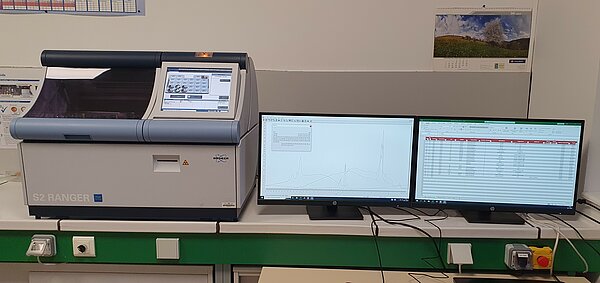
BRUKER S2 RANGER
Appareil de fluorescence X à dispersion d’énergie destiné à l’analyse élémentaire de poudres, de massifs et de liquides.
Il est doté d’un passeur d’échantillons et permet la détection et la quantification des éléments du Sodium à l’Uranium.
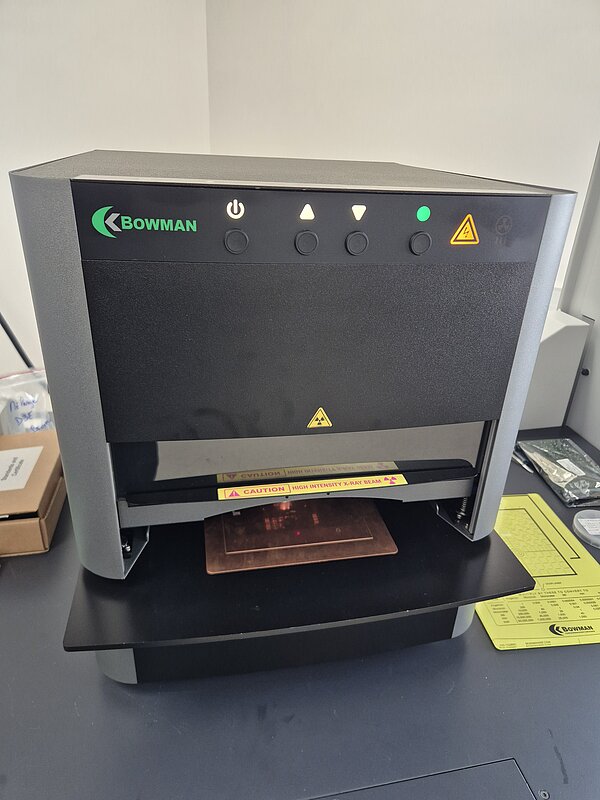
BOWMAN Series M Polycapillary
Energy-dispersive micro X-ray fluorescence instrument for elemental analysis of powders and bulk samples. This instrument allows mapping of the sample with a 15 µm micro-beam.
The detection range covers elements from Aluminum to Uranium.
The X-ray source is a Rhodium source.
News
Training on the Use of X-ray Diffraction: From Structure to Microstructure
- Training dates: June 2–6, 2025
- Target audience: Users of the D2RX Division
Contacts: pascal.roussel_at_univ-lille.fr
catherine.renard_at_centralelille.fr
frederic.capet_at_univ-lille.fr